Banner

Author Archive

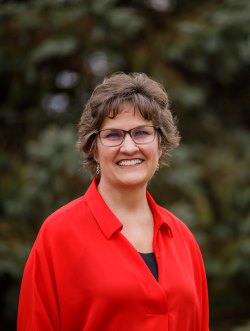
Welcome Shana Peachey Boshart!

Posted on: December 13th, 2023 by Joan

Harrisonburg, VA — Shana Peachey Boshart has been hired as the new Project Facilitator for Shine Curriculum. This grant-funded, full-time position was created to facilitate the development of the Everywhere Faith project, a new faith practice resource. She will begin her work with Shine on January 2, 2024.

Peachey Boshart will work closely with churches and households to assess ministry needs and challenges in Christian education. Cohort churches and families will join focus group meetings, and the feedback will be processed between the Everywhere Faith network and Shine content developers. Focusing on recruiting and supporting contract facilitators to reach diverse families and parents, Peachey Boshart will work with current Shine staff and contractors to develop faith practice resources.

Peachey Boshart served for 20 years as conference minister for Christian formation in Central Plains Mennonite Conference, and for four years as denominational minister for faith formation for Mennonite Church USA. She earned a graduate certificate in theological studies from Anabaptist Mennonite Biblical Seminary, has formal training in spiritual direction, and is a qualified administrator of the Intercultural Development Inventory. She is a credentialed leadership coach and owner of Wisdom Calls Coaching. Peachey Boshart has a long history of networking and resourcing faith formation leaders. She is married to David Boshart, the president of Anabaptist Mennonite Biblical Seminary in Elkhart, Indiana, and together they have three sons and four granddaughters. They attend Prairie Street Mennonite Church, where Peachey Boshart is chair of the executive committee.

Shine, a curriculum partnership between MennoMedia and Brethren Press, was awarded a grant of $1,250,000 in August 2023 from Lilly Endowment Inc. MennoMedia is the publishing arm of Mennonite Church USA and Mennonite Church Canada; Brethren Press is the publisher for the Church of the Brethren.

From the Archives

Posted on: November 1st, 2023 by Joan

Spiritual practices help children and youth pay attention to God’s activity in their lives and show them ways that they can shine their light to others. For this blog post, we’ve taken a stroll through our curriculum archives to bring you some of the best of Shine’s spiritual practice activities!

Junior Youth


Junior youth most often have faith experiences that are influenced by the expectations and judgments of others (both peers and significant adults). They tend to believe what the church—and their friends—believe. Junior youth need to ask important faith questions to help move them toward making a thoughtful and personal commitment to follow Christ. To do that, junior youth need to feel that they belong and are loved and accepted in the church. Spiritual practices help them understand God’s intentions for the world, process questions, and develop a personal relationship with God.

Here are some ways of praying that invite junior youth to notice and reflect on God’s activity in the world and in their lives.

  • Lay out a baking sheet covered in sand or dry dirt and invite youth to sit around it and feel the sand, tracing their fingers through it. Encourage them to feel its dryness, its lifelessness. Ask: Where are you feeling dry or lifeless today? Where do you need God to renew you? How is God with us in our most forsaken or dry-feeling times? Invite silent reflection on these questions and the thoughts about God that come to mind as you play a reflective song, such as “Quiet Place,” (track 8) from Songs for the Seasons.
  • Distribute Bibles and gather everyone in a circle. Discuss different forms of prayer—sometimes we pray aloud using our own words; sometimes we pray silently. Other times we can use the words of scripture as a prayer. Invite youth to open their Bibles to the book of Psalms. There are many types of psalms—psalms of joy, gratitude, wisdom, law, prayer, praise for God, repentance, as well as psalms expressing strong emotions. Give youth several minutes to skim through the psalms, looking for one that catches their eye. Provide time for youth to read silently through one psalm in its entirety. Invite everyone to share one or two verses that they found most interesting. Conclude with a prayer of thanks for the ways God speaks to us through the Bible.

Spiritual practices for junior youth tend to be reflective. Here is a practice that encourages youth to share prayer concerns with each other and engage in corporate prayer for a situation of their choosing.

  • Give each person a LEGO® brick or other interlocking block as you move into a time of prayer. Invite the youth to sit quietly for a few moments to become aware of God’s presence with them. Have them offer thanks to God as they feel each bump on their block. Next, have them pair up with another person and share one prayer request they have. They can pray for each other as they put their blocks together. Then have pairs join with another pair and talk about a situation in their school, church, or community to pray for, putting their blocks together as they pray. Finally, gather the whole group and decide on a situation in the broader world for which the group would like to pray. Invite the youth to put all the blocks together into one structure as they offer brief prayers for the identified situation.

Elementary

Because younger elementary children are concrete thinkers, spiritual practices that connect to their everyday, sensory experiences are most effective. Older elementary children respond to God in deeply personal ways. They can express their feelings through art, prayer, silence, and faith conversations. In a safe and respectful environment, they are able to share their spiritual experiences with others. These spiritual practices provide tangible ways to connect with God.

  • Distribute drawing paper and writing or drawing utensils. Invite everyone to write or draw about a “mountain” (positive experience) and a “valley” (difficult experience), or both from their week. Children may want to draw a large M on their paper to make two mountains and a valley. After a few minutes of drawing and reflection, offer a prayer to God for both the positive and difficult experiences from the week.

Teach children a simple breathing prayer that can be used at bedtime or anytime they feel anxious. Show children how to slowly breathe in and out.

  • As you breathe in, say, “O God” quietly inside your head. As you breathe out, say, “hear my prayer.” You have to say the words inside your head in order to match with breathing in and breathing out. You can pray this prayer at bedtime in the dark and at any other time. There are many other short prayers about things we desire from God. Here are some ideas for you to use throughout the next weeks.

     Have children breathe in and out as you practice praying these phrases:

     O God . . . give me courage.

     O God . . . make me strong.

     O God . . . help my family.

     O God . . . heal my friend.

     O God . . . send your love.

     End with “O God / hear our prayers.”

PreK-Kindergarten

Young children experience God through the people who care for them. Caring relationships are built as you engage in activities and practices together. During the summer quarter of 2019, preschool children were encouraged to use their whole body to pray.

  • Demonstrate first, then say the prayer and do the actions together.

     God, we can love you when we reach up high. (Reach arms overhead.)

     We can love you when we reach down low. (Reach arms down to knees.)

     We can love you when we curl up small. (Make yourself small.)

     We can love you one and all. (Cross arms then reach to hold each other’s hands.)

  • While holding scarves or ribbons, pray with actions. Demonstrate this movement prayer, then try it with the children once or twice. Pray:

    God, you are with us. (Hold the scarf in two hands.)

    You are with us when we are upset. (Wave the scarf in a jagged path.)

    You are with us when we are calm. (Make gentle waves.)

    You are with us all the time. (Wave in a circle shape.)

    Amen. (Bunch the scarf up in your hands.)

  • Tell children that we can praise God in many ways and with our whole bodies. Pray:

     God, we praise you with our feet. (Stomp your feet.)

     We praise you with our hands. (Raise your hands.)

     Thank you for your love. Amen. (Hug yourself.)

Looking Ahead

Yikes! It’s November 1! Preparing for Advent is our theme for the month of November. We’d love to hear how you help children and youth prepare to celebrate Christ’s birth. What tips do you have for learning during this season of waiting and anticipation? Send your tips and ideas for Advent to blog@shinecurriculum.com by November 15 for inclusion in a future blog post. Feel free to include a picture!

Bible Memory as Spiritual Practice

Posted on: October 25th, 2023 by Joan

A familiar psalm or scripture passage can bring comfort during times of trouble and give voice to our praise in times of joy—a true gift. At Shine, we want to give that same gift to children and youth through the spiritual practice of committing scripture to memory. With fun and engaging activities, teachers can sow seeds that grow into a lifelong love of scripture. We choose Bible memory passages that connect to the quarter’s stories and with children and youth. Here are some strategies for making Bible memory fun and meaningful for your group.

Wake up your brain! Recent brain research shows how we can improve learning by “waking up the brain.” Deep breathing delivers fresh oxygen to the brain. Make breathing deeply a ritual as you transition from the session’s prayer activity to Bible memory. Problem solving or learning something new stimulates the brain. Provide background information on the passage, ask open-ended questions, and use a variety of puzzles to engage children and youth. When one side of the body crosses its midline, both hemispheres of the brain are engaged, which stimulates a person’s memory. Get everyone up and moving as you repeat the Bible memory passage together.

Use your senses! Use sight, sound, touch, smell, and taste to create a context for learning. Use actions to heighten sensory involvement and help stimulate the brain to make connections between the biblical story, the learners’ own life situations, and the scripture to be memorized. For example, play music as you repeat words, role-play with costumes, clap hands or snap fingers in rhythm, create crafts, and do other hands-on activities that literally help learners get in touch with the text.

Have fun! Emotions are a filter through which our brains receive information. Nearly every memory relates to a positive or negative emotion. Bible memory can be connected with positive emotions. Design experiences that are interactive, affirming, and fun. Offer memory activities that use a variety of sensory experiences and learning preferences. Encourage freedom of personal expression as students ponder the biblical story and the scripture to be memorized. Laughter helps!

Words to Live By is the Bible memory equivalent for junior youth, reflecting an emphasis on helping youth apply the scripture text to daily life. While not found in every session, Words to Live By is included as an Explore option at least three times in the sub-unit where the text is used. You may notice that some “Words to Live By” texts are longer, allowing youth to see its larger context. The focus in Junior Youth is less on rote memorization activities and more on ways to connect the text to the youth’s own experiences.

Don’t forget the posters! Each teaching kit (print and digital) includes two full-color scripture teaching posters for use during the session. Some activities will have children and youth interact with the text on the poster, while others will simply reference the poster as a visual reminder of the passage. (Those using the digital kit can show the poster using a laptop, tablet, or other electronic device.) We are grateful to have graphic designers whose creative and beautiful work inspires a love of scripture in all of us.


More memory tips:

  • Create motions to go with the words.
  • Have children illustrate key words. Use the illustrations as memory aids.
  • Print words or phrases on index cards or strips of poster board. Hide them around the room. Have learners find them and place them in the correct order.
  • Repeat the memory text often. Vary when you do this during the session. Do it for gathering, during snack time, or at the end of the session.
  • Make sure children and youth understand the words. Talk about the meaning of the text and why it is a good one to commit to memory.

Next week, we’ll share some favorite spiritual practices from the Shine archives. Do you have a spiritual practice activity that has been especially meaningful for you or your group? Tips to share? Send them to blog@ShineCurriculum.com by Monday, October 30, and we’ll try to include them. Feel free to send a picture too!

10 Tips for Guiding Spiritual Practices

Posted on: October 11th, 2023 by Joan

Each Shine session has a spiritual practice to share with your group during Connect to God (Sing and Pray in PreK–Kindergarten). These spiritual practices may include music, movement, writing prompts, moments of silence, or an object to help children focus. Student resources reinforce these practices, inviting children and youth to make them a part of their daily lives. Here are 10 tips to help you guide your group in the spiritual practice each week.

  •  Invite and inspire. We can’t force anyone to pray, but we can invite them to participate. Focus on creating a welcoming, inspiring, and comfortable atmosphere for children and youth to connect with God. Be clear in sharing your expectation that everyone needs to be respectful while the group is praying.
  • Incorporate movement. Children sit a lot, so it’s important to include movement throughout a session, particularly as they learn to engage with God since that is often less familiar. Using different postures, such as kneeling, standing, sitting, and dancing, for prayer and celebration can help connect the mind, body, and heart in talking with God.
  • Be a model. As they get older, children are often more self-conscious about moving their bodies or trying new things in front of others. However, if you throw yourself into activities with genuine enthusiasm, they will likely join you. Encourage children and youth to come up with their own worshipful body positions or have everyone close their eyes so they can move and know they are not being watched. They may also find it challenging to generate ideas for prayer. Begin a time of open prayer by sharing your own prayer aloud. For example, “God, I’m thinking about my friend who has been sick for a while. I pray that you will bring her healing and laughter.” Hearing your ideas may spark ideas for them and guide them in the way of prayer.
  • Encourage participation and leadership. Provide opportunities for children and youth to lead in prayer, singing, playing musical instruments, candle lighting, and other ways. Children want to know they have a place and that their participation and leadership are valued and desired. 
  • Provide a focal image. Connecting with God is sacred and holy. Make the time memorable by spreading out a cloth, lighting a candle, or using other objects to focus the eye and the heart. Placing a small candle in a large glass jar makes the light easy to see and safely move the candle if necessary. Using a battery-operated candle is a great option for groups where a regular candle is problematic.
  • Practice. It takes time to learn new ways of connecting with God. In the week leading up to each session, pray in the manner suggested so that it becomes familiar. Your preparation will be a gift for you and your group.
  • Slow down. Becoming still before God or making space to encounter God takes time. If a prayer includes a pause to imagine or respond, try not to rush. Begin with a short amount of silence, then gradually increase the time spent in silence by 10 seconds until it becomes comfortable for the children. Holding space amid prayer reminds them that connecting with God is important and something to be valued rather than rushed through to get to other things.
  • Provide support. Children’s ability to engage in quiet or still activities differ. Before prayer time, encourage children to find a space where they won’t distract each other. Suggest that they lay their hands in their lap or give them something to hold. Prayerful silence directs a child’s attention and activity inward; asking them to be quiet can leave them at loose ends. Before you begin, let children know that if their attention wanders, they can simply direct it back to their breathing. Don’t be concerned or upset if children move around or make noise; this is normal. Gently direct children’s attention back to prayer or worship.
  • Signal. When calling children to prayer, or if you want to signal them during prayer, try using a set of chimes, a triangle, or a hand-held drum. Short, soft, musical signals will catch the children’s attention without shifting them out of a prayerful space.
  • Adapt. The session plan’s prayers, practices, and rituals are suggestions. It is important to adapt them for your group as needed. If a prayer practice is especially liked by your group, feel free to use it multiple times during the quarter.

Visit the Shine Pinterest page at www.pinterest.com/shinelivingingo and go to the Spiritual Practices board to find journaling prompts, table graces, prayer stations, books, and more tips for using spiritual practices with your group.

Facebook
Email

Connecting with God Through Spiritual Practices

Posted on: October 4th, 2023 by Joan

At Shine, we believe that spiritual practices are essential to forming a solid foundation for a life of faith and obedience to God. Spiritual practices are activities that help children and youth—and indeed all of us—to pay attention to what God is doing in our lives and in our world. By doing—practicing—these activities, we become open and able to see God’s movement in our lives.

Many of the spiritual practices found in Shine sessions focus on prayer and teach children and youth that prayer can happen at any time and in many ways in their everyday lives. However, there are other ways of being in the presence of God. Learning to encounter God intentionally through play, work, relationships, and other activities helps us to remember that God is present in all aspects of our lives.

Our posts this month will include tips for connecting with God through spiritual practices. We’ll also comb through the Shine archives and share prayers and practices that you can try with your group. We’d love to pass along your favorite prayer practice, inspirational moment, funny story, or quotable quote from your time leading children and youth to connect with God. Please submit your prayer practice or story to blog@shinecurriculum.com by October 16 for consideration.

For today’s blog, we are sharing a simple prayer practice using a paper chain that you can do this week. These devotions were first shared in the Fall 2017 teacher resource, Prism. (The quoted scriptures have been updated to the NRSVue version.) Read, reflect, pray—and may you be refreshed for your ministry with children and youth!


Daily Devotions for Teachers

Thursday

Acts 2:16–17 No, this is what was spoken through the prophet Joel: “In the last days it will be, God declares, that I will pour out my Spirit upon all flesh, and your sons and your daughters shall prophesy, and your young men shall see visions, and your old men shall dream dreams.”

If a young child says something about God, many adults smile at each other, wink, and talk about how cute it is. But children can be profound if we listen. The words from the prophet Joel teach us to pay attention to the insights of others—from young or old, from sons or daughters. What are your children or youth telling you today?

Reflect: Write the names of the children or youth you spend time with regularly on paper strips and link them together to form a chain. Use your chain as a prayer reminder to give thanks for and ask God’s care for each one.

Prayer: God, help us to see and acknowledge the movement of the Spirit among our children and youth.


Friday

Genesis 8:22 “As long as the earth endures, seedtime and harvest, cold and heat, summer and winter, day and night, shall not cease.”

The days in the northern hemisphere are starting to grow shorter. Autumn signals a change but does not usually trigger fear. We know that other seasons will follow; beyond winter will come another spring and summer. This promise, which God’s people cherished in memory and scripture, is not as obvious as you’d guess. Their neighboring cultures and others around the world often harbored fears that winter would conquer without a spring. We can hold God’s promise of the changing seasons as true and reliable.

Reflect: Consider God’s gift of the sunrise and sunset each day. Imagine the chaos of not having these familiar rhythms to the day. What rhythms and routines have you established in your own work, family life, and spiritual life? In what ways do those routines and rituals help you in your work, family life, and relationship with God? Add a link to the beginning and end of your chain while thanking God for the gift of the sunrise and sunset to mark each day.

Prayer: Thank you, God, for the security of your promises.


Saturday

Genesis 13:8-9 Then Abram said to Lot, “. . . If you take the left hand, then I will go to the right, or if you take the right hand, then I will go to the left.”

When dividing a cookie with a friend or sibling, were you ever told that one person would divide and the other person would pick first? Children and adolescents resist this wisdom. They want to both divide and choose. Adults resist too. Sometimes we must make a division of our time and energy. Recall a time in your life when you felt divided. How did you discern the priority for your time and energy?

Reflect: Add your name to a link and pray for wisdom to both care for yourself, your relationship with God, and the children you care for.

Prayer: Dear God, in this moment I offer you my undivided self.


Sunday

Genesis 21:2 Sarah conceived and bore Abraham a son in his old age, at the time of which God had spoken to him.

Abram and Sarai’s story begins with God telling them to abruptly pick up stakes and move. And God made what seemed an impossible promise, but it all came to pass. Have you lived long enough to see God’s promises come true in your life? Has your life had some twists and turns like Abraham and Sarah’s? Are your children or youth aware that it can take time for dreams to come true?

Reflect: Think about God’s surprises in your life and write one or more on a link in your chain as a reminder to give thanks to God.

Prayer: Give me patience, O God. Help me know that my timing is not your timing.


Monday

Genesis 33:14 “Let my lord pass on ahead of his servant, and I will lead on slowly, according to the pace of the cattle that are before me and according to the pace of the children, until I come to my lord in Seir.”

Jacob wants to proceed, not at his brother’s pace but at the pace of the children. The late Christian educator Rosella Wiens Regier emphasized this verse during a conference presentation. She pointed out that the pace of the world can be difficult for children, seniors, and those with disabilities. No matter the speed of the twenty-first century, there will be times when we need to proceed at the pace of our beloved children and youth so that we can all arrive together.

Reflect: Who in your life needs a slower pace? Write their name on a link and pray, asking God for ways that you might help them slow down.

Prayer: God, help me slow down and walk at the pace of those around me.


Tuesday

Genesis 37:3 Now Israel loved Joseph more than any other of his children because he was the son of his old age, and he made him an ornamented robe.


Jacob’s problem probably wasn’t the gift he gave to Joseph. It was probably the love, attention, and time he didn’t give to his other children. Singling out this one son only made Jacob’s other children realize how much they were unloved. Demonstrating love to members of a family takes more than strict, legalistic fairness. It requires a constant stream of love expressed in words and actions.

Reflect: Have you experienced sibling rivalry or jealously among friends? Write the names of your siblings or friends on a link and include them in your prayer.

Prayer: Loving God, help me to share my love fairly and freely.


Wednesday

Genesis 45:5 [Joseph said,] “And now do not be distressed or angry with yourselves because you sold me here, for God sent me before you to preserve life.”

Joseph’s story with its ups and downs is not only entertaining, but it also provides the biblical backup to the assertion that God works through the bad times as well as the good. Joseph clearly sees God’s hand in what has occurred. He tells his brothers that thanks to God’s guidance, all has turned out for the best. They must not blame themselves. He sees the pain and anguish of his years through the filter of self-discovery.

Reflect: Take a look at the paper chain representing your family of faith. Say a prayer of gratitude for all those who are part of your life, who have helped you grow, made you laugh (and cry), and inspired you.

Prayer: Thank you, God, for walking with me through good and bad times. Help me to see your hand in my life, in my parenting, and in my teaching.

Facebook
Email

Like Sands Through The Hourglass . . .

Posted on: September 27th, 2023 by Joan
So is the flow of a Shine session.

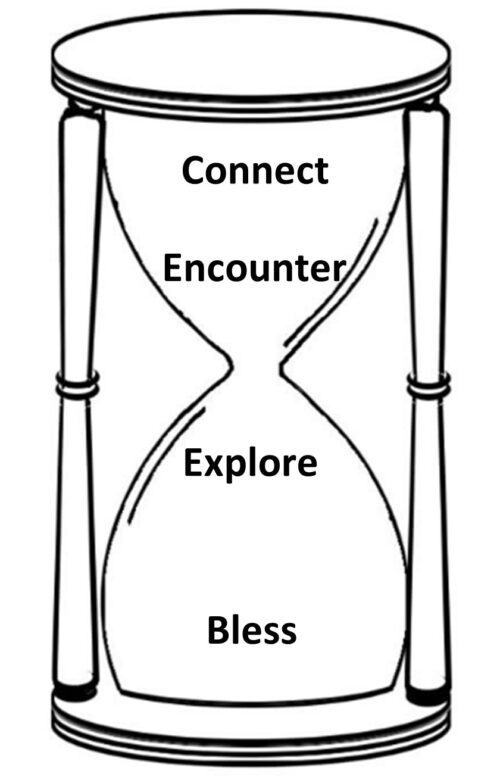
As we ease into a new curriculum year, we want to share the image of an hourglass to help us think about how a Shine session welcomes children and youth, forms and shapes them to receive and engage the Bible story, and sends them into the world to live out what they have learned. Carrie Martens, a former editor for Shine, shared this helpful image at a writers’ orientation several years ago. Let’s take a tour through the current Shine session plan using Carrie’s image of the hourglass.

Connect is the time when children, youth, and leaders engage with each other and with God through conversation, activities, prayer, and song. They become community so that they can encounter God together. Encountering God takes some vulnerability, and we need to know one another in order to be vulnerable with each other. In Connect to Each Other we engage with each other; in Connect to God we come together to become aware of God in our midst. We are with each other and with God. Prayers and songs form us and shape us to listen and receive the word of God in the session and in our lives. Note that PreK–Kindergarten has different headings under Connect—Make Friends, Sing, and Pray.

Within Connect, we also engage children in Bible Memory or Learn a Verse (PreK–Kindergarten) activities. There are two Bible memory verses or passages each quarter. The teacher’s guide includes interactive ways to help children understand and memorize the passage. For instance, children may sing the words to the tune of a simple song, use motions or call-and-response, or create clapping rhythms.

Junior Youth also has two Bible passages to explore in greater depth throughout the quarter. The Words to Live By activities are included during Explore. While youth may end up memorizing the verses, the emphasis is placed on the meaning and application of the verses to their lives.

Encounter is the center of the session, but it is not just about hearing the story. It is also about being shaped and prepared to encounter God in the story. In Elementary, Encounter begins with The Back Story using the “Follow the Story” Cards to reacquaint children with the previous Bible stories from the quarter. These cards help children visually understand how the stories and characters are related. Sometimes The Back Story includes learning how to find the text in the Bible, giving helpful background information, or explaining the context of the story.

Each age level has its own method of encountering the Bible story. PreK–Kindergarten children enjoy a colorful story picture and an age-appropriate retelling of the story. The Peace Table: A Storybook Bible is the source of the story for elementary-age children. Junior youth read the story directly from the Bible. Each age level may also include additional ideas for sharing the story using readers’ theaters, story figures, actions, and so on.

Within Encounter are questions that help children and youth engage more deeply with the Bible story: Wonder for PreK–Kindergarten, God’s Story/My Story for Elementary, and Dig In/Live It for Junior Youth. Use this time to allow children and youth to sit with what they’ve heard, to dig in, to ask questions, to imagine, to push and pull, and to wrestle. The questions are focused on the story and our lives in relation to that story.

Explore. With each Explore option, we pull back a bit—not away from the story as much as into our own lives. How can we engage this story, have it sink deeper, play with it, see it in a broader context of the biblical narrative, and see it in relation to our own lives of faith? Each age level has its own set of options. Consider your available planning time, length of session, and available materials as you choose the activities that will work best for your group.

Bless or Empower (Junior Youth). We often think of Bless or Empower as worship, but at the end of the session. Here we acknowledge that God has been with us. We sing and pray to bring our time with God and each other to a close. This is also the space to send children and youth out with significant and central messages, such as God’s constant love, the light of Christ among us, and how all are created in God’s image. The goal is to connect with and affirm children and youth, and inspire them for the week ahead.

Adapted from an article by Carrie Martens that first appeared in the Winter 2018–19 issue of Prism.

Facebook
Email

Building Community with Neurodiverse Children

Posted on: September 13th, 2023 by Joan

As our faith formation program returned to in-person programming a couple of years ago, it was clear that there were a number of very energetic, active children. These children needed particular attention and structure to help nurture their participation in Sunday school. Teachers of these students began to take their classes outside more and started each class with a game or a movement activity (helpful for most kids coming to Sunday school after 85+ minutes of worship!). We are grateful that, each week, the Shine curriculum offers fun, thoughtful movement suggestions. 

It was also clear that our program could do more to support teachers, children, and their families in building an inclusive faith formation community. 

A number of children in our congregation are neurodivergent, which means having developmental or neurological function that differs from what is considered “typical.” In our church, this includes diagnoses like ADHD and autism. Recognizing that the systems and structures within a place are what disable people and are barriers to their full participation, we wanted more support to be able to build community with children of a variety of abilities and brains. We first reached out to the Anabaptist Disabilities Network (ADN) for consultation. 
When meeting with Jeanne Davies, the Executive Director of ADN, she opened by saying, “We believe that the whole church is better when all people are welcome and everybody belongs, including people with disabilities . . .

“All week long, kids are in places where people are trying to fix them—parents, schools, and therapists trying to make them typical. As much as we can, while still keeping everyone safe and getting along as a group, let kids be the way they are while they are at church. We’re not trying to do therapy; we’re just trying to love them. People are not problems to be solved; they are our brothers and sisters to be loved.” 

Tips for Supporting Neurodiverse Children

These words have helped to set the tone as we’ve focused on building and deepening inclusive community in our faith formation program. The following tips, offered from or inspired by our consultation with ADN, were discussed among Sunday school teachers at our annual orientation meeting, and then implemented:

  • Sunday school registration questions: We expanded the space for families to respond about allergies, dietary needs, medical conditions, diagnoses, and medications. We also added a space for “Important information to know about your child to help them feel welcome and engaged (triggers, effective calming strategies, challenges).”
  • Provide social ramps: Those of us who have good social skills can help those who don’t. Ask safe questions to engage children (for example, asking about pets or breakfast). 
  • Look for kids’ gifts: Everyone wants to serve and be valued. Give kids a job (for example, helping to pass out snack, running to get supplies, setting up “Follow the Story” cards).
  • Allow drawing or appropriate use of fidgets while the lesson is going on. This can help some kids to pay attention better. 
  • Allow kids space to move around and/or to stim. Stimming is a self-stimulating repetitive, often protective behavior (for example, tapping, rocking, or humming).
  • Use when/then for challenging behaviors: “When ___ (hoped-for behavior), then we can ___ (preferred activity/start the activity).”
  • Don’t pressure someone to look you in the face. If they are avoiding your gaze, look to their side, which is less intense. 
  • Normalize “unusual” behavior. Acting outside the social norms is okay as long as no one is getting hurt. Teachers set the tone. If the teacher makes it okay, everyone else can relax. For example, “That’s distressing for some of us, but they can’t help it. We’re going to ignore it and move on.” 
  • Ask parents and caregivers for their input on how their children can thrive or how to manage challenging behaviors. 

Last year’s teacher orientation included the following:

  • sharing of teachers’ experiences related to building inclusive community for children of all kinds of brains and abilities
  • discussing the above tips for supporting neurodiverse children
  • reflecting on this article from Allison Bird Treacy on Neurodiversity in the Classroom

Educating the Congregation

Over the past year, our congregation has also begun an Accessibility Ministry Team. We started by interviewing each person (or a family member) in the congregation with a disability or neurodivergence, to help assess how these individuals are already included and how the congregation can do better. The team also completed ADN’s self-assessment on accessibility. Plans are underway for further education across the congregation.

In our Sunday school program, we will be drawing from the book Helping Kids Include Kids with Disabilities to do this. Specifically within children’s faith formation, we are launching two new accessibility initiatives this year.

  1. Creating a “Peace Place”

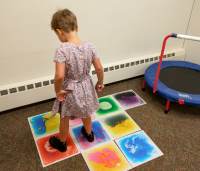
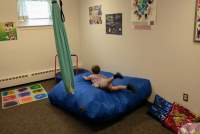
The first is a “Peace Place” in a classroom that is currently not being used. We reached out to the families of neurodivergent children to ask them what kinds of tools would help them to regulate or give them the sensory input or calming break that they would need, either during worship or Sunday school. The top request was a sensory swing, and I’m grateful that the staff is open to installing one in the ceiling! Other requests were a mini trampoline, crash pad, sensory tiles, bean bag chairs, and thinking putty. We have invited the congregation to donate these specific items.

We will create the space early this fall. It can be used by one child at a time, supervised by an adult, and following our congregation’s child safety guidelines. We will initially open the space with a blessing and introduce all children to the space and explain its purpose and guidelines for use. 

  1. Training and Recruiting Teachers

We are also recruiting a team of Inclusive Children’s and Youth Ministry Aides, who will provide friendship and assistance for a child or group of children who have been identified as benefiting from extra support in Sunday school and Kids’ Club. In some cases, these aides will be able to provide traditional helper support in Sunday school, like with transitions and serving snack, and also give particular attention to the kids who may have a behavior plan or who could benefit from 1:1 support or taking a break.

Our training this fall will provide overall education on disabilities, inclusion, and neurodiversity, and also share information (with parents’ permission) specific to the particular children who have been identified as benefiting from additional support. 

Although recruiting teachers and helpers for our program since the pandemic has been challenging, we have been delighted to discover that there is energy for this specific initiative and that it is drawing in new persons who haven’t been a part of our children’s faith formation team before. 

Learning as We Grow

We are in the early phases of launching these initiatives and are excited to see how the Spirit continues to guide us as we learn and grow! We thank God for the opportunity to engage in these ways to foster belonging for the children who experience greater barriers to access and participation. 

If you have any questions, I’d be happy to connect on the “Teachers Helping Teachers Shine” Facebook group!

Jennifer Svetlik (she/her) directs Children’s Faith Formation and Justice Initiatives at Salford Mennonite Church (Harleysville, PA). She has a master’s in theology from Washington Theological Seminary. She and her partner Sheldon Good are parents to two awesome elementary-aged kids, including a neurodivergent third grader. 
Facebook
Email

7 Tips for Building Community

Posted on: September 5th, 2023 by Joan
  1. Build relationships. Your relationship with the children and youth is very important, more important than any planned activity. Children and youth learn best when they are with adults who genuinely like them. They are observing and learning from you—even if it doesn’t always seem like it! They are affected by the way you pray and the enthusiasm you show as you tell a story, sing a song, or lead a game. When you talk about your favorite Bible story or name things that you’re grateful for, you are modeling this for the children. When you smile and say something kind, this conveys acceptance and the love of God.
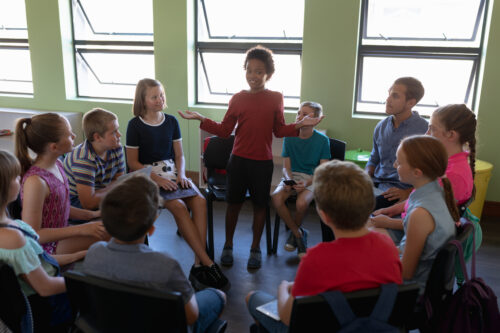
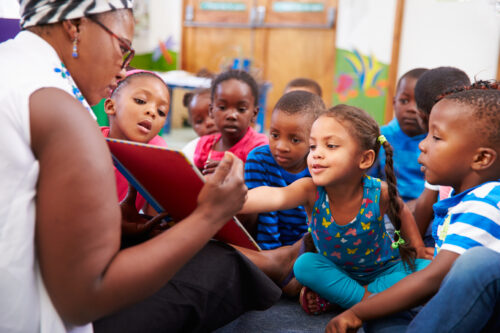
  2. Respect and honor differences. Make space for different experiences, remembering that each child or youth comes with a unique story. This means different socioeconomic backgrounds, church experiences, educational contexts (including homeschooling), racial-ethnic identities, family structures, physical abilities, and so on. Learning to know everyone may take some time, but as their stories unfold, be inspired by the blessing that each person brings.
  3. Establish routines. Following predictable routines helps children and even older youth feel comfortable, safe, and confident. Use the first weeks to set routines for the quarter or for the year. What should children and youth do when they come into the meeting space? What routines are needed? If there is more than one leader during the quarter, communicate the routines and expectations that have been established so that there is consistency from week to week.
  4. Respect each person’s comfort level. Some children and youth feel uncomfortable talking in front of a group. Allow them the option to pass if they do not want to talk. If you find that a child or youth never wants to speak in front of the group, talk with them privately before or after a session to see if anything is keeping them from feeling safe in sharing with the group. Incorporate ways to respond that don’t require verbal responses. For instance, all children could give a thumbs-up or thumbs-down to answer a question. Responses could be written down, collected, and shared anonymously.
  5. Encourage collaboration and teamwork. Choose activities where children or youth can work together in pairs or small groups whenever possible. Spend some time modeling how to listen well in a group setting. Encourage children or youth to share ideas and support each other. Working together on an art activity or pairing up to respond to a discussion prompt fosters cooperation and the development of strong relationships.
  6. Encourage leadership. Each person in the group can serve as a leader, even in simple ways. They can help prepare the room, set up chairs, and distribute supplies. Each person’s contribution demonstrates care for the other people in the group and helps create a positive space for worship and learning. Children and youth can also lead prayers, songs (including with instruments), and readings. Children of all ages want to know they have a place and that their participation and their leadership is valued and desired.
  7. Get to know parents or caregivers. Find ways to get to know and communicate with the parents and caregivers of your children or youth. Plan events or activities where they can participate alongside their children or youth, such as simple fellowship times or opportunities to help during a session. Plan an “open house” during the quarter where parents and caregivers can come prior to your regular meeting time to browse children’s artwork, view a readers theater or skit of a Bible story, or participate in a spiritual practice. Engaging with parents and caregivers can help strengthen your group’s sense of community by connecting families with one another.

How do you build relationships with the children and youth you teach? How do you help them get to know each other and feel welcome and valued? We’d love to share your ideas and suggestions! Send them to blog@shinecurriculum.com by September 13.

Facebook
Email

Welcome to the Fall quarter!

Posted on: August 30th, 2023 by Joan

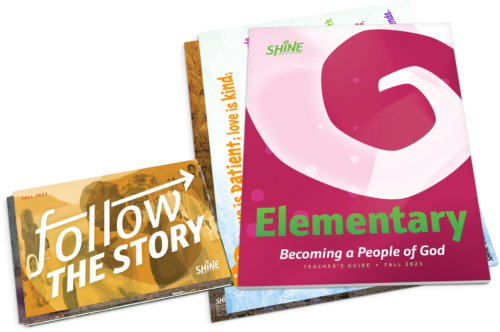
Welcome to the Fall 2023 quarter of Shine: Living in God’s Light! The theme for the quarter is “Becoming a People of God.” We begin with stories from Genesis, focusing on the family of Abraham and Sarah. This family has many challenges, as all families do! They struggled to get along and love each other well. They weren’t sure if God was going to come through for them. They also learned to make peace and to trust God’s promises. Next, the book of Exodus follows the story of the Israelites as they suffered in slavery and then were led to freedom. After many years, they finally settled in the Promised Land.  

These ancient stories have much to teach about who God is and what it means to be the people of God. We can learn more about living in community with others. Through times of struggle and times of joy, we can draw strength from our relationship with God and each other. 

Our last cycle of Shine curriculum launched during the pandemic when many churches and Sunday schools were not meeting. Fall 2023 is a bit of a re-launch! You’ll find all the things you love about Shine: well-crafted retellings of the Bible story, wondering questions, spiritual practices, and fun activities to round out the sessions. But there is a whole new look and new products!

We think you’ll love our new student materials this fall! The PreK-Kindergarten age level has tear-off booklets with one activity for preschoolers and one for kindergarteners in each session. To address the wide age range of the Elementary age level, we created new tear-off booklets for Younger Elementary (grades 1–3) and Older Elementary (grades 4–5) children. Each booklet has two activity pages per session. You’ll still order the Elementary Teaching Kit but order the booklets that correspond to the ages in your group. Quest, the Junior Youth devotional, retains its at-home format but with a new look.

Shine’s new storybook Bible, The Peace Table, is the source of the weekly Bible story for Elementary. It contains all the stories for the next three years of the curriculum, so it is a good investment for your faith formation ministry with children. Just like Shine On: A Story Bible, we’re sure this storybook Bible will become a favorite of children of all ages.

If you are new to Shine curriculum or need a refresher, there are new overview videos for each age level of the curriculum. These brief videos will take you through the session plan and all the products you need for teaching. You can find these videos on the Shine YouTube channel or on the Shine website.  Share them and this blog with teachers in your church.
We are excited for a new quarter of learning and appreciate your commitment to encouraging children and youth to love Jesus, grow in faith, and change the world!

Stay Connected!

Find Shine on Facebook, Instagram, and YouTube. Join the Teachers Helping Teachers Shine Facebook discussion group to interact with other teachers who are using Shine curriculum. Reach out to us with questions or concerns.

Facebook
Email

Peace Witness through Peace Paths

Posted on: August 21st, 2023 by Joan

“Why is the Bible so violent?” My son asked me this many years ago, after reading The Brick Bible: A New Spin on the Old Testament, which tells Bible stories in comic book form with LEGO® figures as the characters. My kids spent long hours every day playing with LEGO® bricks, and so I had excitedly purchased that Bible for them. Perhaps it wasn’t my finest parenting moment, but I gave them the book without reading it first.

After his question, though, I sat down to read it and was shocked at what I found. Page after page shows terrible violence. Hundreds of thousands of people are slaughtered, their blood covering the ground under their dead bodies. Individuals are hanged, stabbed, dismembered, killed in their sleep and stoned. Women are raped by family members and enemy armies, burned alive, abducted, given to men to be “abused all night.” One is even carved up into 12 pieces with a knife. And yes, Jael hammers a tent peg through the skull of Sisera. It’s as if the author went through the Bible to find the most violent, disturbing stories and then paired them with cute little LEGO® figures to make the stories “fun.”

When our team set out to create The Peace Table, my son’s question was in the back of my mind. That comic book Bible served as a cautionary tale in several ways. First, we did not want to traumatize children by emphasizing and glorifying stories of violence with no context — my son did not want to read stories from the Old Testament for a long time after his experience! Conversely, we did not want to erase the violence and conflict from the biblical story. It would be easy to do the opposite of what The Brick Bible did: We could go through the Bible and chose only the stories of peace and harmony, out of a desire to protect children from all that is unpleasant. But our children live in a world where arguments, conflict, bullying, abuse, sexual violence, gun violence and war are far too commonplace.

It is essential that we equip our children with tools to help prevent, divert and respond to conflict in peaceful ways. They need support for processing and healing from violence perpetrated against them. They need to know what to do when they hurt someone else. The Peace Table is one tool to support children and families on the lifelong journey to becoming peacemakers.

While The Peace Table includes difficult stories that have elements of conflict and violence — Jacob and Esau, Hagar, David and Nabal, and Jesus’ death on the cross, to name a few — these stories are not told in a vacuum. Parents and caregivers are not left on their own to figure out what to say next. Each story has questions and prompts to help families discuss and process the emotions, decisions and possibilities within the story. What led to the conflict? How might things have been different if people had made different choices? When have children experienced something similar? How did they respond, and what was the outcome?

These types of questions don’t solve the problem of violence, and The Peace Table does not provide simplistic answers to complex issues. But the questions do offer a starting place for conversation and communal biblical interpretation as to why violence happens and what can be done about it. At the back of the book, there are many ideas about how to have peace with one another and how to experience peace within oneself during difficult situations. Families can reflect on these tangible ideas and decide which ones might be effective in a given situation — either in the Bible story or in a conflict that the family or child is experiencing today. Additional pages about peace with God and peace with all of creation round out the biblical concept of shalom. Peace is not just the absence of war.

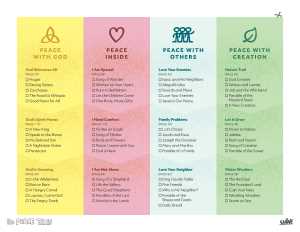
A biblical understanding of peacemaking involves wholeness: right relationships with God, self, others and all of creation. The Peace Table includes 12 Peace Paths to help children and families explore various aspects of peace throughout the biblical story. Each path has 5 stories, some from both the Old and New Testaments. Choose a path, such as “Family Problems,” “God Is Amazing,” “Nature Trail,” or “I Need Comfort.” Read the first story, respond to the prompt, then turn to the indicated page number to find the next story in the path.

The Brick Bible isn’t all bad — the New Testament is more palatable. In fact, the concept is quite clever and fun in many ways. But I wish that The Peace Table had been on my shelf when my children were young. I wish I’d had the tools that are in this book to support me in having conversations with my boys about the violence in the Bible. I wish I’d had all the tangible peacemaking ideas at my fingertips.

My son’s question still stands: Why does the Bible include so much violence? I haven’t found an entirely satisfying answer to that. But we cannot leave our children to try to make sense of biblical or modern-day violence on their own. The Peace Table offers support for engaging these difficult questions and provides a holistic vision of the world God desires. May we work together as individuals, families and faith communities to create a more just, beautiful and peaceful world.

Learn more about The Peace Table at www.thepeacetablebible.com. Download free “Follow the Peace Path” bookmarks there, as well!

This article was originally posted on Menno Snapshots. Reprinted with permission from Mennonite Church USA.

Facebook
Email

Upcoming Shine Webinar!

InVITE YOUR TEACHERS TO SIGN UP TOO!