
Banner

Author Archive

Safe Church, Safe Kids

Posted on: August 16th, 2023 by Joan

Kids are streaming into the faith formation wing, laughing and talking. In an ideal world, each child will make friends, pray, explore a Bible story, sing songs, have some fun, and go home with things to think about. However, there are too many stories of children who are harmed or even abused at church. It’s easy to think something like that would never happen at your church. Surely you can trust people who offer to work with children, right? Unfortunately, a quick internet search demonstrates otherwise. Children’s health and well-being cannot be left to chance; the stakes are too high! What policies and practices has your church implemented to ensure children’s safety?

Here are 10 safety ideas to talk about with your church leaders in preparation for the faith formation year.

  1. Child protection policy: Develop a comprehensive policy that outlines procedures to protect children and youth as well as provide clear guidance for volunteers and staff. Online screening, training, and classroom procedures lay out the steps that a teacher and pastor should take if there is suspected abuse, either happening at church or in another setting. See additional resources below.
  2. Background checks and screening: Implement a screening procedure that involves an application, interview, and reference check for all volunteers and church staff. Conduct background checks to identify any potential risks or concerns.
  3. Pick up/drop off procedures: Create an organized procedure for picking up and dropping off children that ensures children’s safety and minimizes children’s anxiety. Make sure that teachers know who is authorized to pick up each child or have designated adults that handle arrival and departure. For larger churches, consider having a special registration area for new families so they don’t have to wait in a long line.
  4. Emergency preparedness: Create an emergency response plan that includes procedures for medical emergencies, evacuations, and natural disasters. Train staff and volunteers on these procedures.
  5. Classroom procedures: Ensure all classroom doors have windows or have a policy that doors should be partially open. Require that two adults be present in every classroom and ministry setting. Be attentive to your adult to child ratio so there is adequate supervision, noting what is best for groups of different ages. Plan how you will handle bathroom breaks. Whenever possible, two adults should accompany a child or children to the restroom.
  6. First aid and medical information: Have a first aid kit readily available in the Sunday school area. Record children’s medical information, such as allergies or medical conditions. Be sure that authorized staff or volunteers have access to this information in case of an emergency. Identify volunteers who are certified in CPR or have first aid training.
  7. Parent/guardian communication: Establish open lines of communication with families. Update them on the policies and procedures that are set in place. Encourage them to share any relevant information that will help their child have a positive, safe, and meaningful experience.
  8. Physical space: Check the classroom(s) to be sure that they are child-friendly and safe. Place potentially dangerous materials or equipment out of reach. Provide tables and chairs that are appropriately sized for the age of the children. Get down to the eye level of the children and look at the space. What might need to be added, changed, or removed so children can safely and easily navigate the space? If there is a child with a physical disability, make necessary modifications so the child can fully participate.
  9. Behavior management: Identify and discuss appropriate methods of discipline to be used when more significant behavioral issues arise. When will parents be involved? When should a teacher consult with a church staff member or other leader?
  10. Training: Provide training for all volunteers, including information about the church’s child protection policy, emergency procedures, and guidelines for appropriate interaction with children. Provide education for teachers and children about safe touch and personal boundaries.


Using these policies and practices communicates to everyone that safety is a priority for your children’s ministry. This boosts the confidence of families as well as teachers and volunteers. With these policies and practices in place, you can know that you are supported and prepared to handle any situation that might arise. As a teacher, you play an essential role in the spiritual life of the children. Creating a safe environment sets the stage for the sacred work of faith formation.


Additional Resources

  • Reducing the Risk is a program to help churches train pastors, staff members, and volunteer leaders to identify and prevent child sexual abuse. Online streaming videos and downloadable training workbooks walk participants through common supervision scenarios, and tips for best practices. (reducingtherisk.com)
  • Childhelp National Child Abuse Hotline is staffed 24/7 with professional crisis counselors who can talk to teens experiencing abuse, caregivers, and anyone who is concerned about the safety of a child or youth. This is not a line for reporting child abuse to authorities. Rather, they offer support, resources, and guidance. All calls are anonymous. Contact the hotline via call or text at 1-800-4-A-CHILD (1-800-422-4453). You can also Live Chat on their website: childhelphotline.org.
  • The Child Safeguarding Policy Guide for Churches and Ministries by Basyle Tchividjian and Shira M. Berkovits
  • On Guard: Preventing and Responding to Child Abuse at Church by Deepak Reju
  • Let the Children Come: Preparing Faith Communities to End Child Abuse and Neglect by Jeanette Harder
  • Discipline that Restores by Ron Claassen and Roxanne Claassen
Facebook
Email

Creating Worshipful Space

Posted on: August 8th, 2023 by Joan

As the Kids Ministry Director for a church with a high percentage of children, I love to create spaces for kids to explore their faith and connect with God in a variety of ways. From the conceptual to the practical, here are some of my favorite ideas for setting up a classroom that invites worship, connection, and reflection.

Our Physical Space: 

Our Kids Wing has 5 classrooms, which are divided into flexible age groups as follows: Toddler, Early Childhood, PreK–K, 1st–3rd grades, and 4th–5th grades. Each classroom has an area for gathering as a group, a table for art and messy play, a sensory table or bin, a reading area, and toys and games. Your space and classrooms may vary, so this list includes ideas for all ages and stages.

Creating a Culture of Curiosity

Before we think about activities and stations, we start by establishing a culture of curiosity—about who the kids are, what their needs are, and what they wonder about. We also encourage them to practice that same curiosity about who Jesus is, what God is like, and what the Bible stories can teach us.

Inclusive language

From the moment kids arrive, we are intentional about honoring their families. One simple example is choosing inclusive language, such as saying “parent” or “grown-ups at home” instead of “mom and dad” when referencing a child’s family. This acknowledges that families come in all shapes and sizes, with different arrangements of caretakers and children, and does not presume an expected “standard” that may not fit. 

The Practice of Wonder

After each Bible story or book we read, we end with a time of curious wondering together. Rather than guiding kids toward a predetermined moral or conclusion to each story, we invite them to respond with their own perspectives and questions. Teachers listen and support the conversation, reinforcing our values:

  • Questions are good and valuable.
  • God invites our wonder and isn’t offended by it. 
  • Bible stories are complex, with many possible takeaways that can be added to over time.

Respond & Reflect

After we tell a story and wonder together, we offer several options for kids to further explore the stories and respond in different ways. These response options are invitational, and kids are welcome to move between them as desired. A sign or instruction sheet at each station explains and guides the process while teachers move around to support as needed.

Story pieces

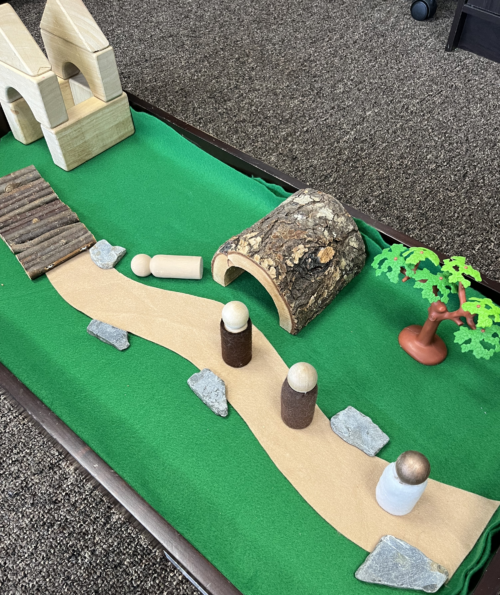
Our Bible stories are often illustrated using props, such as wooden peg people, felt backgrounds, and miniature pieces. One response option is for kids to use these story pieces to reenact the story or engage in dramatic play.

Art

We always have a way to respond to the story through art, which may be open-ended with a variety of materials or an invitation to follow a guided craft. 

Movement

For those who need to move, exercise, or use their bodies, we try to include an option to participate in physical movement. Balancing stones, a mini slide, and mindful movement cards are common favorites.

Books

Our reading area is stocked each week with a display of books related to the topic or theme. Kids who want a quieter, individual experience might choose this area. 

Service

One of our church’s values is to partner with God in bringing love and justice to the world around us. One way we do that is to invite our kids to participate in service projects, such as making tie blankets for children in need, coloring welcome signs for refugees, and sending congratulation cards to people who recently earned their citizenship. We hope these practices create a connection between our faith in God and the work of loving our neighbors.

Prayer Scaffolding

With prayer stations and simple instructions, we offer the scaffolding that helps kids discover and develop their own prayer lives and connect with God in a variety of ways.

Magnet Prayers

A simple magnetic bulletin board, a roll of magnet strips, and dry erase markers are all you need to create this station. We wrote a few prayer prompts, such as “God, you are . . . ,” “Thank you for . . . ,” “I need help with . . . ,” and “Please be with . . .” Kids can use dry erase markers to write responses to these prompts on blank magnets. We also include magnetic poetry words for kids to arrange or add to their prayers. 

Prayer Tree

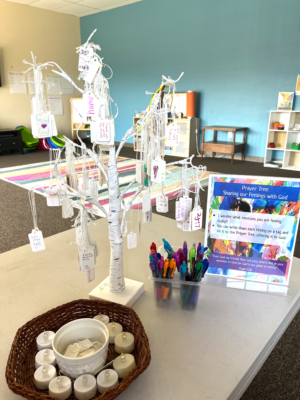
A simple prayer tree station can be created with a tabletop tree, small paper tags, and pens. Kids can write or draw their prayers on the tags and hang them on the tree as a symbol of giving them to God. Optional: add a sign with different prayer topics or prompts.

Prayer Beads

There’s no need to limit prayer time to written or spoken language. Kids of all ages and abilities can design a set of prayer beads to guide their prayer practice. Offer a variety of shapes, sizes, and colors of beads, and invite kids to choose beads to represent their different prayer needs. They might turn the beads into a bracelet or keychain. A worksheet can be used to track their choices and help them remember.

Sensory Experiences:

Sensory experiences are fun and open-ended, allowing kids to process their thinking and engage their senses at the same time. Sometimes our sensory bins follow the theme or Bible story for that day, and sometimes they are simply a place to play and de-stress.

Sand Tray “Zen Garden”

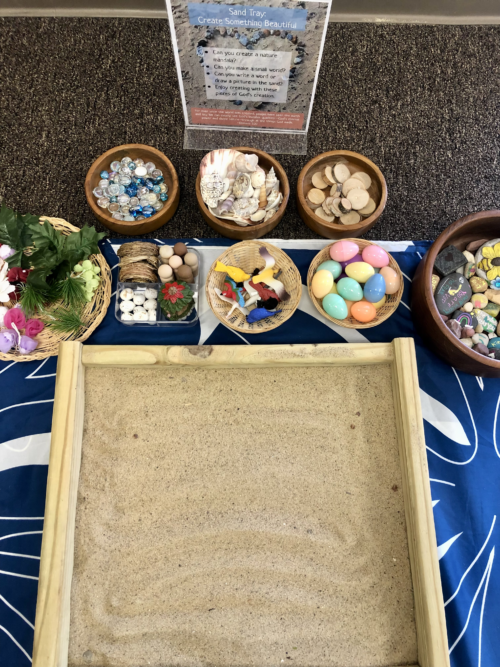
In our older classrooms, the sand tray functions similar to a zen garden, with tools for raking, smoothing, and creating patterns in the sand. Other natural materials and small pieces are added to follow the story or theme, and we might include a sign to challenge kids to create something specific.

YouTube for background music/visuals

As kids choose which stations and response options to participate in, we like to have background music and visuals playing to set the tone for engagement and reflection. We often choose YouTube videos of natural wonders set to music, favorite worship songs, or live nature cams from around the world.

We want to invite kids to explore who Jesus is and what God is like within a safe and caring community. By encouraging curiosity, offering a variety of response options and prayer practices, and practicing inclusive community, we can create a space for our children to connect with a gracious God, who is real and accessible in all the mysteries of life. 

Lianna Cornally is the Kids Ministry Director at Sanctuary Community Church in Coralville, Iowa. With a degree in elementary education, Lianna loves to create inclusive spaces where kids can practice wonder, create art of all kinds, and connect with God and each other. She lives with her husband and three kids on a little hobby farm in the country.

Facebook
Email

5 Tips for Starting Well

Posted on: August 1st, 2023 by Joan

It’s almost time for the fall quarter of Shine to begin! Here are 5 tips for starting well:

  1. Dive In

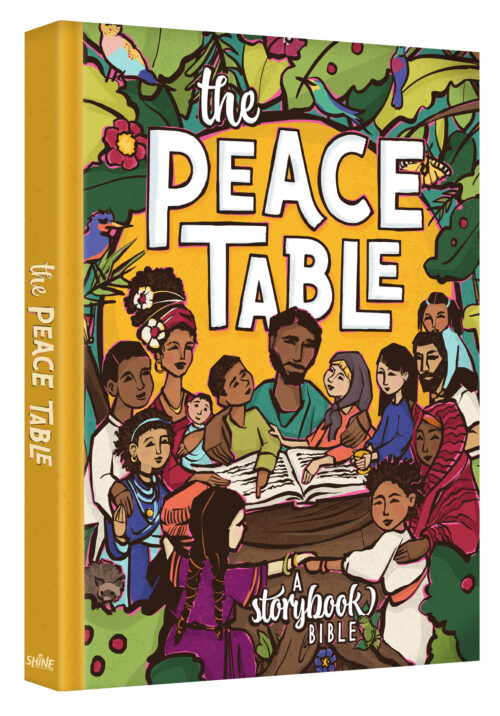
Take a deep dive into the curriculum materials! Familiarize yourself with the products in the teaching kit. Even if you won’t be teaching every week, review the Bible outline on the inside front cover of the teacher’s guide so you have the big picture of the quarter. Get to know the session plan by reviewing the descriptions on page 4 in the teacher’s guide. Explore other materials for your age level, such as The Peace Table: A Storybook Bible. Each session plan has an at-a-glance chart to summarize the supplies and preparations for that session so that’s a great place to start your preparations. Check out the Media Connections that are posted on Pinterest: Fall 2023 Pinterest Board. They are organized by session for ease of use. Browse through the “Extras” page so you know how to find things easily: www.ShineCurriculum.com/Extras. The more familiar you are with the available resources, the easier it will be for you to teach effectively.

Tips for Elementary teachers: If you are new to the “Follow the Story” Cards included in the Elementary Teaching Kit, watch this helpful video: “Follow the Story” Cards Tutorial . For an in-depth look at The Peace Table, which is the source of the Bible story, check out this video: The Peace Table Webinar.

  1. Set Up

Prepare the physical space. Start by thoroughly cleaning the room and getting rid of clutter. Organize supplies so that they are easily accessible by the children. Check out some of the DIY ideas on our Pinterest board: Classroom Setup/Organization. If possible, designate an open area in the room where the whole group can gather for the Bible story and active games. Lay out a blanket for everyone to sit on or set out individual carpet squares or other pieces of cloth as “seats” for each person. Set up a table with enough chairs for everyone. Display posters from the teaching kit and any other decorative posters, banners, or wall hangings to make the room warm and inviting. Be sure to read next week’s blog post for a more in-depth look at creating worshipful space.


  1. Connect

Before the year begins, take time to reach out to the children and families you will be working with this year. Gather contact information and ask for their preferred method of communication, such as text messages, email, social media posts, or phone calls. Find out if any children have physical, intellectual, or emotional challenges, allergies, dietary restrictions, or other needs that require accommodations or special support. Share a bit about yourself and your plans and hopes for your time with the children or youth.

  1. Reflect

Before you teach, take some time to reflect on the scripture. Read the Bible background essay included in the teacher’s guide and read the story from The Peace Table if you are an Elementary teacher. How does the scripture speak to you? What resonates with you? What do you want to say about this scripture to the children or youth you teach? Also, pause to notice how you are feeling as you enter the time with the children. Are you flustered? Stressed? Tired? Nervous? Attend to those feelings so that you can be fully present to the children. After you teach, take a few moments to reflect on the experience. What went well? What did you notice about individual children? About yourself? What could you do differently next time to help the session run more smoothly?

  1. Collaborate

Teaching Sunday school can sometimes be a lonely job! Ask around to find out if people would be willing to serve in a support capacity. Someone may be willing to provide snacks for your class, lead songs, prepare crafts, be an occasional helper in the class, or work one-on-one with a child as needed. Talk with other teachers about challenges you are facing and see if they have ideas to share. Join the Teachers Helping Teachers Shine Facebook group so you can ask questions and interact with other people using Shine curriculum. Know that you are not alone and that the work you are doing is so important!

Thank you for giving your time and energy to help form faith in children and youth. May God bless you with the wisdom, grace, inspiration, creativity, and joy you need for each moment! t

Everyday Faith

Posted on: July 28th, 2023 by Joan


FOR IMMEDIATE RELEASE

July 28, 2023

A grant of $1,250,000 from Lilly Endowment Inc. will support the development of Shine: Living in God’s Light. MennoMedia received the grant on behalf of Shine, a joint publication of Menno Media and Brethren Press. The grant is part of Lilly Endowment’s Christian Parenting and Caregiving Initiative, which aims to help parents and caregivers share their faith and values with their children.

MennoMedia and Brethren Press join Lilly Endowment in recognizing that families are at the center of faith formation. This generous grant will make possible a new Shine effort called Everyday Faith. The Shine curriculum team will walk alongside congregations and households in developing spiritual practice materials that inspire families to embody the story of God in everyday life.

Shine’s Everyday Faith project is rooted in two scripture texts: the instruction in Deuteronomy 6 to keep God’s words close to our heart and share them with our children and Jesus’ teaching in John 15 to abide in the vine. The grant will be used to engage parents and caregivers in building faith practices at home and to engage congregations in fostering deeper faith connections with families.

“The goal of Everyday Faith is to draw near to households and churches in order to foster deeper conversations around faith,” said Joan Daggett, project director. “This grant will enable Shine to (1) cultivate a network of churches and families for listening, mutual support, and feedback about pilot faith practice resources, and (2) produce a suite of practical, joy-filled faith formation materials from an Anabaptist perspective that appeal to diverse households and help congregations resource families in building the language and daily habits of faith with children and youth.”

MennoMedia is one of 77 organizations receiving grants through this competitive round of the Christian Parenting initiative. Reflecting the diversity of Christianity in the United States, the organizations are affiliated with mainline Protestant, evangelical, Catholic, Orthodox Christian and Pentecostal faith communities. Many of the organizations are rooted in Black church, Hispanic and Asian Christian traditions.

“We’ve heard from many parents who are seeking to nurture the spiritual lives of their children, especially in their daily activities, and looking to churches and other faith-based organizations for support,” said Christopher L. Coble, Lilly Endowment’s vice president for religion. “These thoughtful, creative and collaborative organizations embrace the important role that families have in shaping the religious development of children and are launching programs to assist parents and caregivers with this task.”

Lilly Endowment launched the Christian Parenting and Caregiving Initiative in 2022 because of its interest in supporting efforts to help individuals and families from diverse Christian communities draw more fully on the wisdom of Christian practices to live out their faith fully and well passing on a vibrant faith to a new generation.

About Lilly Endowment Inc.

Lilly Endowment Inc. is a private foundation created in 1937 by J.K. Lilly Sr. and his sons Eli and J.K. Jr. through gifts of stock in their pharmaceutical business, Eli Lilly and Company. While those gifts remain the financial bedrock of the Endowment, it is a separate entity from the company, with a distinct governing board, staff and location. In keeping with the founders’ wishes, the Endowment supports the causes of community development, education and religion and maintains a special commitment to its hometown, Indianapolis, and home state, Indiana. A principal aim of the Endowment’s religion grantmaking is to deepen and enrich the lives of Christians in the United States, primarily by seeking out and supporting efforts that enhance the vitality of congregations and strengthen the pastoral and lay leadership of Christian communities. The Endowment also seeks to improve public understanding of diverse religious traditions by supporting fair and accurate portrayals of the role religion plays in the United States and across the globe.

Facebook
Email

Stories from Teachers

Posted on: July 26th, 2023 by Joan

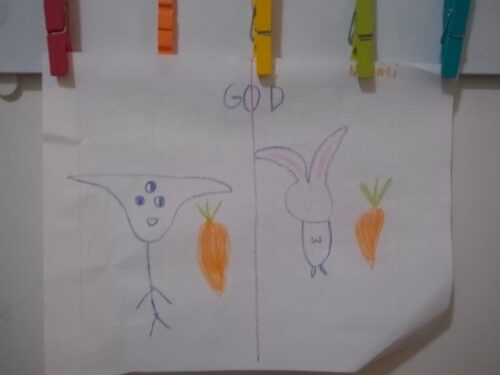
“A little munchkin gave this picture to me a few months ago. When I asked her to tell me about it, she said, ‘Bunnies love carrots and so does the alien. And God loves them both.’ I love that this kiddo understands two deep truths: That no matter how different we are, there are always things that connect us to the other. AND that God is so big that He ALWAYS loves the other: the ones that look different or vote differently or believe differently or are broken differently (even if the other is so different that they have three eyes and live in a whole other far away foreign world). God looks upon the person that we look on with disdain and He calls them His beloved. This picture now serves as my reminder whenever I am tempted to “other” another, that God doesn’t ever see the other. He just loves indiscriminately, fully, extravagantly. Every time. Everyone. Everywhere. When Jesus said that we have to become like children to enter the kingdom of heaven, I think this is what He was talking about. It’s why I go to church with a bunch of preschoolers and kindergarteners every Sunday.”

—Mary Dorsett
Long Beach Christian Fellowship (Long Beach, California)


“The Shine lesson introduction of “mountain and valley” experiences of second grade students was a real connect. Most everyone wanted to share with their friends and hear from their teachers as well! Our frustration became not enough lesson time. Even with other great beginning theme ideas came the request for “mountain highs and valley lows” sharing each Sunday. The problem was having ten chattering cherubs! Actually, they learned to meld and be very sympathetic and caring!”
—Patricia MacGregor
Berkey Mennonite Fellowship (Goshen, Indiana)


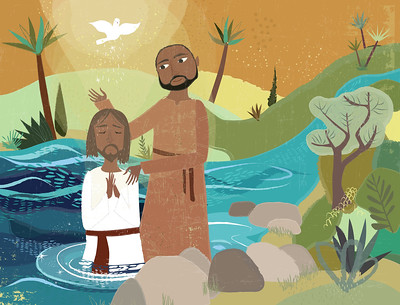
“It is always fascinating to hear children putting the stories of the Bible into their own words after a Sunday school Bible story. After I taught the story of Jesus’ baptism, one of the three-year-old children in the group told her grandma during Sunday lunch, ‘When Jesus was born, it was under a river in Holland!’ I don’t know where the Holland part came from, but we had talked about our Christmas celebrations and reviewed the story of Jesus’ birth before starting the story of Jesus’ baptism that day. When I told a friend about this child’s retelling of the baptism story, she said, ‘That’s why we tell the stories every year!’ I know this child knows more about Jesus’ baptism now. On another occasion when my son was a preschooler, before he could read, he sat down with a Bible after church one Sunday during Advent. He announced, ‘I will read the Bible!’ and he turned to pages full of words and “read” them, saying ‘Hope!’ ‘Hope!’ ‘Hope!’ ‘Hope!’ as he turned each page.”

—Judith Farris
Emmanuel Presbyterian Church (Sarnia, Ontario)


Our August theme is “Get Ready”! We’d love to hear what you do to prepare for the start of your faith formation year. How do you decorate or arrange the room? What supplies do you gather? Do you connect with families ahead of time? Send your tips and ideas for starting the year to blog@ShineCurriculum.com by August 16 for inclusion in a future blog post. Feel free to include a picture!

Facebook
Email

5 New, 5 Tried and True

Posted on: July 17th, 2023 by Joan

5 New Things in Shine Curriculum

1.     Teachers Helping Teachers Shine Blog

Use the QR code in the teacher’s guide or subscribe at www.ShineCurriculum.com/blog to receive weekly emails for teachers. This blog replaces Companion magazine from previous years. Watch for opportunities to submit your story related to the theme of the month! The theme for August is “Getting Ready.” How do you prepare your classroom or worship space? What supplies do you gather? How do you start communicating with families? Send your ideas and tips (max 200 words) to blog@shinecurriculum.com. Feel free to include photos!

2.    The Peace Table: A Storybook Bible

The source of the Bible story for Elementary groups (grades 1–5) will now be The Peace Table! In addition to the stories, the book includes maps, prayers, Bible background information, peace paths, and other peace content to accompany the sessions. Be sure each classroom has at least one copy of The Peace Table and consider purchasing copies for families to use at home. Don’t miss the free printable Peace Path Bookmarks found at www.thepeacetablebible.com! Children can check off each story as they read the 12 peace paths in The Peace Table at home.

3.      PreK–Kindergarten Student Booklets

The booklet pages for younger children have been reworked so that there is a page geared for preschool children and a page geared for kindergarten children each week. Three sessions include bonus pages. The pages are completed during the session and then sent home each week. While there is no longer weekly content for families in the booklet, you can direct families to the Shine Families website (see below) for activities.

4.      Younger Elementary and Older Elementary Student Booklets

Spotlight magazine has been replaced with booklets for younger elementary (grades 1–3) and older elementary (grades 4–5) children. Each booklet has two pages per session, with occasional bonus pages. The pages are completed during the session and then sent home each week. Booklets include scripture-related activities, Bible background information, prayer prompts, word searches, crossword puzzles, mazes, games, and stories of children who are making a difference in the world.

5.      Shine Families Website

Have you heard about the Shine Families website?! Check it out at ShineFamilies.org and share it with your families. There are weekly devotional ideas, downloadable activities, etc. for use at home.


 5 Tried and True Things in Shine Curriculum

1.       Approach to faith formation

Shine sessions continue to prioritize the biblical story, teach Jesus’ way of peace, emphasize spiritual practices, encourage open-ended reflection on scripture, connect the Bible with daily life, foster relationships, and make learning fun.

2.      Session Plan and Extras

The session plan for each age level remains the same and is explained in greater depth on page 4 in each Teacher’s Guide. Media connections are still included with each session and posted on Pinterest for ease of use. The Fall 2023 board can be found here and is organized by session: Pinterest Fall 2023. Additional resources, demonstration videos, tips for teaching, recipes, templates, song lyrics and motions for Everybody Sing, and much more are found at www.ShineCurriculum.com/Extras.

3.      Print and Digital Teaching Kit Options

Apart from student materials, the curriculum products you will need are included in the Teaching Kit. The kits for all age levels contain a teacher’s guide, two Bible memory posters, and two additional posters. The PreK–Kindergarten kit also has 13 story pictures, and the Elementary kit has “Follow the Story” Cards. The kits are available in print and digital formats. Digital teaching kits include permission to share the session materials among teachers in your church. If you purchase a printed Teaching Kit, you can also purchase additional printed Teacher’s Guides as desired.

4.      Junior Youth Student Devotional

Quest continues as the student piece for junior youth (grades 6–8). This at-home devotional provides a Bible story summary, prayer practice, articles to read, writing prompts, puzzles, media connections, action ideas, and more. In addition to the devotionals you order for youth, purchase one more for the teacher to have during the session. This allows the teacher to introduce the upcoming content to youth and guide discussion about the previous week’s content.

5.      Everybody Sing

Music is a central part of the Shine curriculum. The Everybody Sing double album includes Worship Songs for Children recorded by The Walking Roots Band and Songs for the Seasons written and recorded by The Many. Do the children in your group like to use song motions? Find them here:

·        Worship Songs for Children Motions PDF

·        Songs for the Seasons Motions PDF

Listen to sample clips of the songs here: Everybody Sing Samples

 Get Connected

Find Shine on Facebook, Instagram, and YouTube. Join the Teachers Helping Teachers Shine Facebook discussion group to interact with other teachers who are using Shine curriculum. Reach out to us with questions or concerns.

·        Website: www.ShineCurriculum.com

·        Email: contact@ShineCurriculum.com

·        Facebook: Shine: Living in God’s Light | Harrisonburg VA | Facebook

·        Facebook Discussion Group for Teachers: Teachers Helping Teachers Shine | Facebook

·        Teachers Helping Teachers Shine blog: www.ShineCurriculum.com/blog

·        Blog email: blog@ShineCurriculum.com

·        Instagram: @ShineCurriculum4kids

·        Pinterest: Shine: Living in God’s Light www.pinterest.com/shinelivingingo


Facebook
Email

You Are Qualified to Teach!

Posted on: July 12th, 2023 by Joan

If you had to write a job description for a Sunday school teacher, what qualifications would you include? Maybe your list would look like this:

While these are wonderful qualities, believe it or not, none are required for you to be successful as a teacher for children or youth!

The curriculum provides what you need in terms of Bible background information, teaching tips for classroom management, lots of activity options, and guidance for how to structure the time you have. The sessions are intentionally designed so that you will not have to spend long hours preparing.

So what is required for faith formation leaders beyond what the curriculum offers? In short, it can be summed up by the greatest commandments: Love for God. Love for children and youth. And love for self.

  1.  Love for God: You may have become a Christian when you were a teenager, or maybe faith is new to you. Either way, you have something important to offer. When you are with the group, express your love for God in genuine, heartfelt ways. Sing songs you love. Pray in ways that feel comfortable to you. Children and youth will respond to your sincerity and come to understand that faith can be expressed in a multitude of unique ways.
  2. Love for children and youth: Get to know the children and youth through informal conversation. Connect about the things you have in common with them, be it a love for baking, a favorite local sports team, or the pets you have. Ask about their interests and experiences. These interactions help build trust and lay the groundwork for deeper conversations about faith, God, and the joys and challenges of life.
  3. Love for self: You are enough, as you are. Your unique gifts, values, experiences, and interests can play an important role in helping form faith in the children and youth you work with. Trust that God has invited you to this work and will impact their lives because of who you are, not despite you!

So if you have a “Teachers Should Be” list in your head, rip it up! Know that the curriculum provides a map to guide you. When you add in love for God, children, and yourself, the curriculum will spring to life. Who knows what will happen next?!

Get Connected

Upcoming Shine Webinar!

InVITE YOUR TEACHERS TO SIGN UP TOO!