

What We’re Learning-Part 2
Last week, we started to share what we are learning through the Shine Everywhere initiative. We described what we have learned so far from those who used the “Follow the Peace Path” Cards. Today, I’ll share what we are learning through our reading of other books and research, as well as from the other projects funded by the Christian Parenting and Caregiving Initiative of Lilly Endowment Inc.
If parents are the primary influence on their children’s faith formation, then faith formation of children and youth begins with the faith formation of their parents. This means taking seriously the faith development, doubts, and hang-ups of parents.
This implies a far more collaborative approach with parents than congregational leaders are used to. Our faith formation models over the past century have focused on equipping congregational lay leaders as teachers, not parents. And we have focused on creating resources those teachers can use in Sunday School or kids club settings at church, not at home.
Does this mean, then, that we focus on “equipping” parents to use resources that we create for them to use at home? The more we think about it, the less we like this language. We are concluding that we need to collaborate with parents in the creation of the activities and resources that fit them and their children.
We are also learning that parenting is more stressful than it used to be. At the end of August, the US Surgeon General Vivek Murthy released Advisory on the Mental Health and Well-Being of Parents “to call attention to the stress and mental health concerns facing parents and caregivers and to lay out what we can do to address them.”
Murthy is encouraging Americans to “cultivate a culture for parents and caregivers to thrive.” He has four recommendations:
“First, it’s time to value and respect time spent parenting on par with time spent working at a paying job, recognizing the critical importance to society of raising children. Second, while parents and caregivers may have the primary responsibility for raising children, they shouldn’t have to do it entirely on their own. Third, we need to talk openly about the stress and struggles that come with parenting. Fourth, we must foster a culture of connection among parents to combat loneliness and isolation.”
Also this summer, the book, The Anxious Generation was released, which outlines the harms social media and mobile phones have brought upon children and youth. The authors document the harm caused by overprotectiveness in the real world combined with a lack of protectiveness in the digital world.
Parents need the support of their faith communities now more than ever. Churches can be places where parenting is valued. Churches can be communities that offer practical support and encouragement to parents in their daily challenges. Churches are full of older adults who have been there and can offer empathy and advice for the challenges of parenting. And churches are the perfect place to offer gatherings for connection and friendship among parents.
We conclude that it’s time for congregations to reorient their faith formation programming toward collaboration with parents. Pastors and faith formation leaders are the perfect people to facilitate a gathering of parents to foster connection, friendship and mutual storytelling.
If these recommendations sound good to you, consider applying to be a Shine Everywhere Partner congregation. I’ll partner with you to discern with your parents a way forward that builds faith in both parents and their children.
Shana Peachey Boshart, Shine Everywhere Project Facilitator
 For many congregations, “regular attendance” now means that families attend church one or two times a month, rather than every Sunday. Children are involved in many extra-curricular activities, so families may have scheduling conflicts. Or parents may be seeking to spend time with their children at home after a busy week. Some families may not attend church regularly because of demanding work hours, child custody arrangements, or because one parent spends time traveling for their job. Families can quickly begin to feel disconnected from the church community—even if they are away for just a couple of weeks.
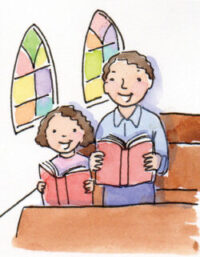 Finally, we can model the value that Jesus placed on children by including them in worship and in other areas of church life. Find out which children enjoy reading scripture aloud and let your worship team know. Connect with your pastor or worship team and suggest some prayers and songs that are familiar to children to include in worship services. You may even want to challenge the congregation to memorize Bible verses alongside the children and feature those verses during worship.

 We are excited to share more about the new “Follow the Peace Path” Cards that are a part of our Shine Everywhere initiative. This deck of 52 “Peace with Creation” cards is packed with ideas for families to do at home together. Whether your church has summer Sunday school or not, these cards are a great way to stay connected with families and provide parents and caregivers with an easy and fun faith formation resource to use at home.
 The 2024 unit is built around the “Peace with Creation” Peace Path from The Peace Table and includes three five-session modules: Nature Trail, Let It Grow, and Water Wonders. Each session includes songs, prayer, instructions for telling the Bible story, wondering questions, three activities, and media connections. Path to Peace leader guides will be available in both print and digital formats. Both include access to music and other digital resources. Each age-level leader guide includes black and white printable student pages, two per session (one for younger children and one for older children). The cost of each age-level unit is $59.99 USD.